


Description
Product Overview
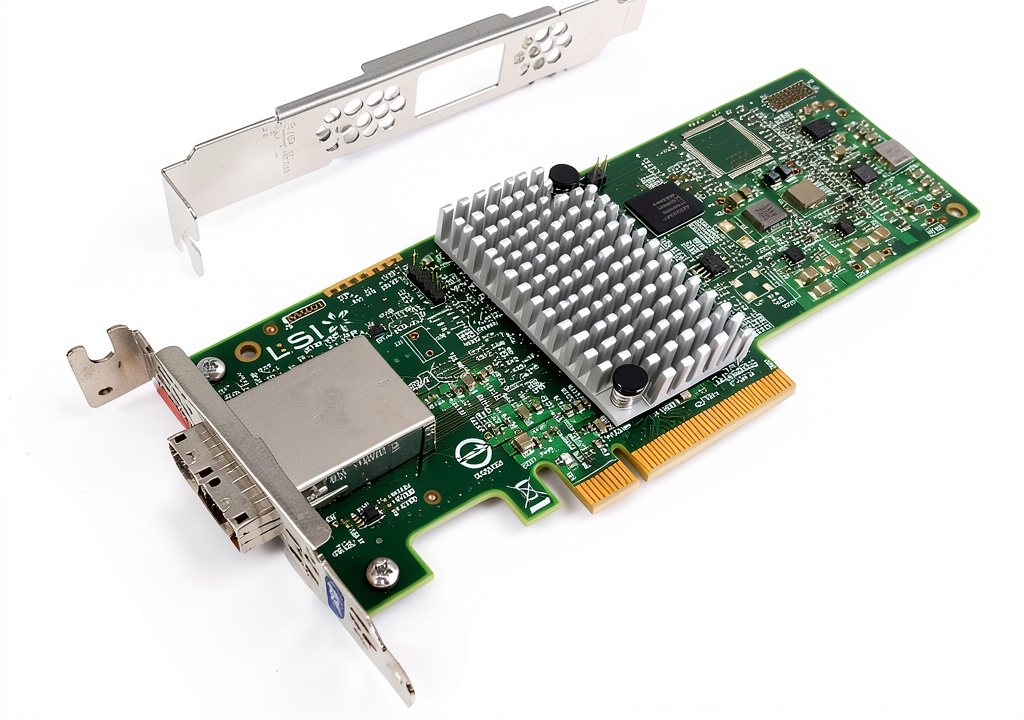
The LSI 9300-8e HBA is a high‑performance host bus adapter designed to bring reliable, high‑speed storage connectivity to modern server environments. Featuring eight independent ports, the card utilizes a PCIe 3.0 x8 interface to deliver up to 12 Gb/s per lane, ensuring that each attached SAS or SATA device operates at its maximum bandwidth. Built on a proven LSI architecture, the controller supports both legacy and native 4K hard drives, providing flexibility for a wide range of storage configurations, from traditional spinning disks to high‑capacity solid‑state drives. The device is compatible with Windows, macOS, and Linux operating systems, making it a versatile choice for heterogeneous data‑center operation and development labs.
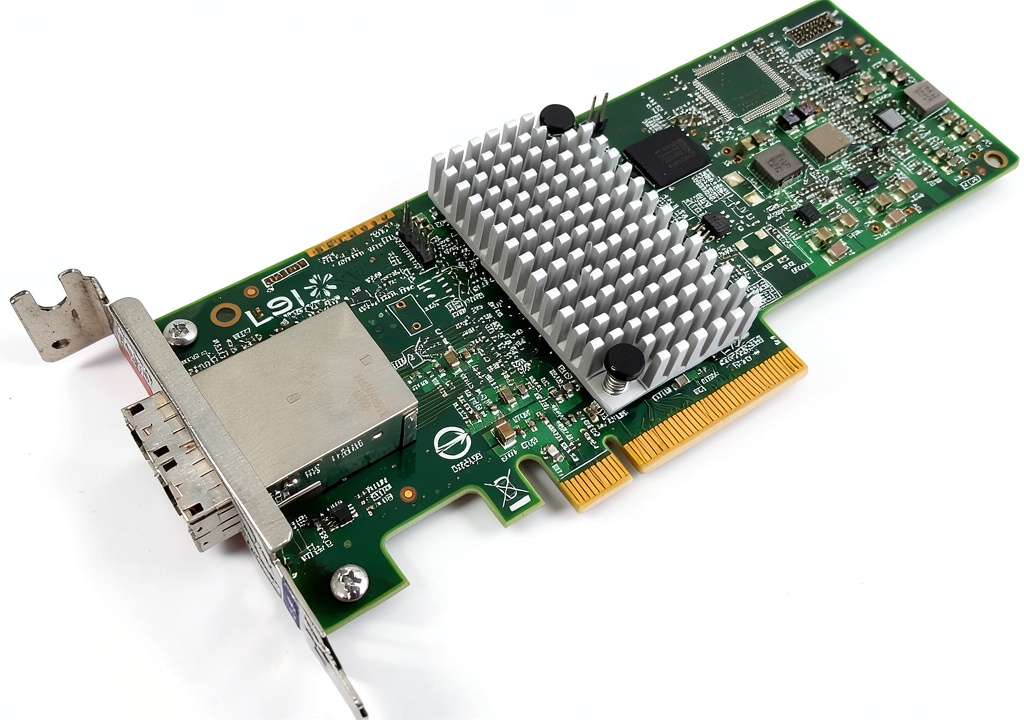
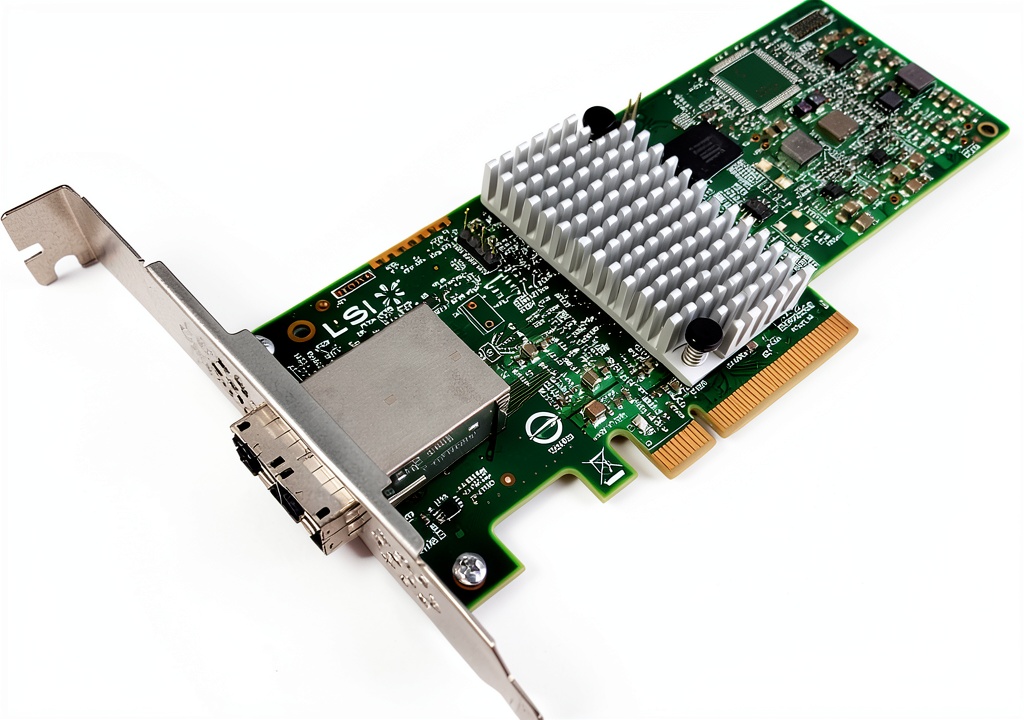
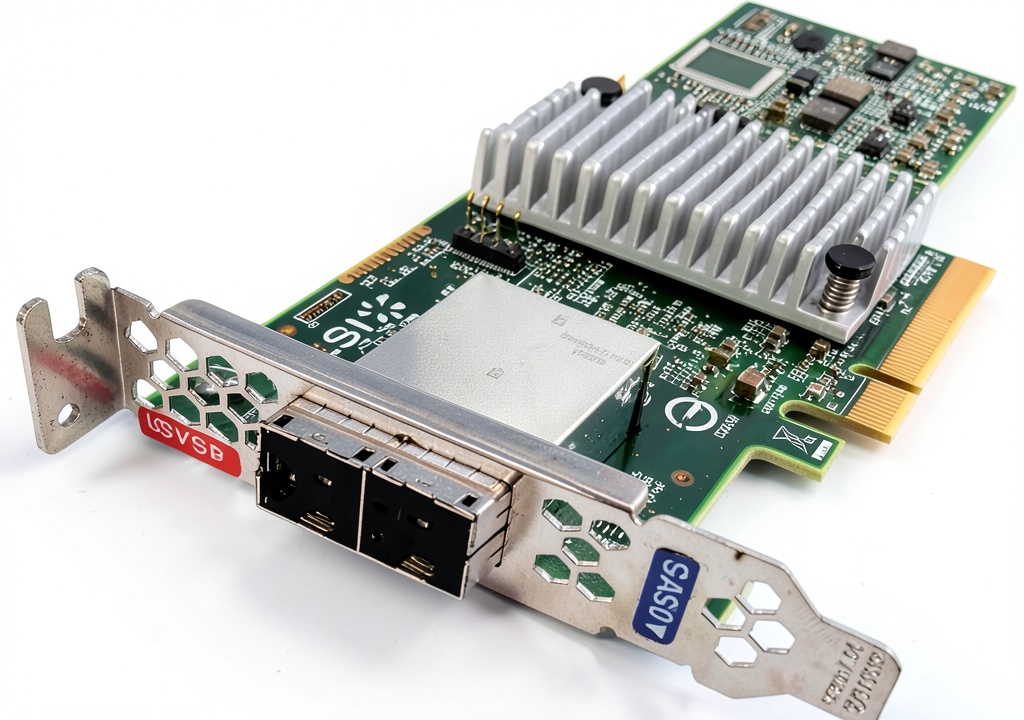
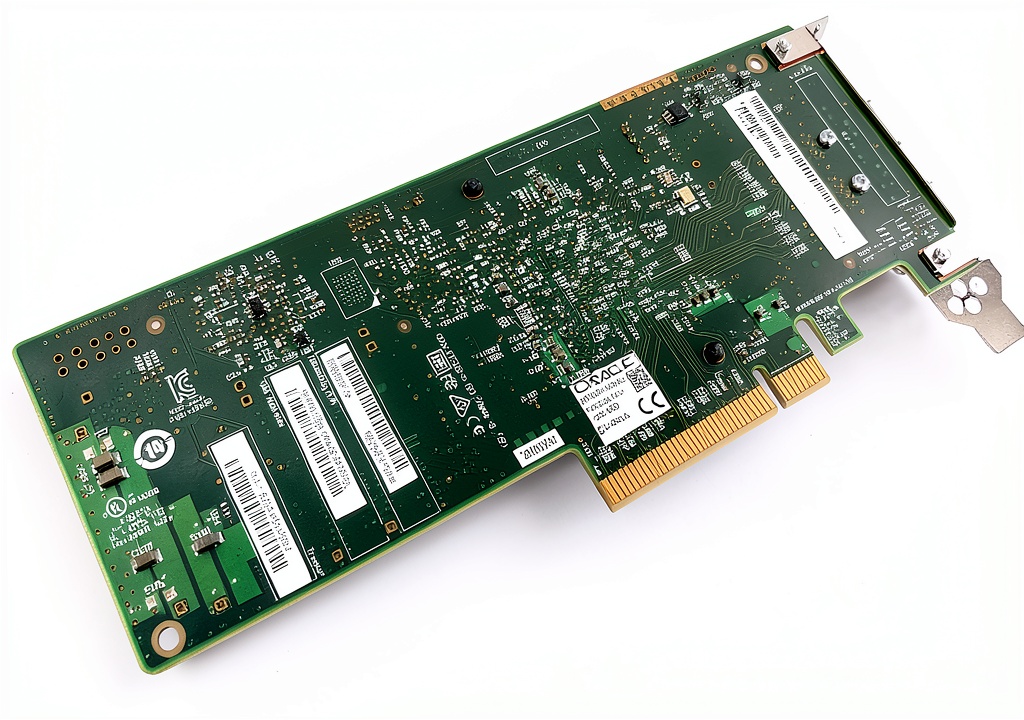
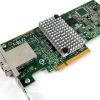
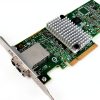
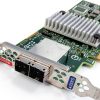
Physically, the 9300-8e measures 10.25 inches in length, 1.63 inches in width, and 6 inches in height, weighing just 8.8 ounces, which allows it to fit comfortably in both full‑height and low‑profile server chassis. The package includes both full‑height and low‑profile brackets, giving installers the freedom to mount the card in a variety of rack or tower configurations without the need for additional hardware. Connectivity is provided through two mini‑SAS SFF‑8644 connectors, each capable of supporting up to four SATA or SAS drives, for a total of eight drives per card. This dual‑port design simplifies cable management and reduces the overall footprint of the storage subsystem, while still delivering the high throughput required for demanding workloads such as virtualization, database clustering, and high‑performance computing.
The 9300-8e’s architecture is built around LSI’s proprietary SAS2008 chipset, which is renowned for its low latency and high reliability. Each port operates independently, allowing the controller to balance traffic across all attached drives and prevent any single device from becoming a bottleneck. The card also supports advanced features such as hot‑swap drive replacement and error‑correcting code (ECC) for enhanced data integrity. With a maximum of 12 Gb/s per lane, the controller can fully exploit the bandwidth of modern SSDs, delivering performance that rivals dedicated RAID cards while maintaining a simple, driver‑free configuration.
Thermal management is addressed through a copper heat spreader that covers the controller’s main chipset, dissipating heat efficiently even under sustained heavy I/O loads. The card’s low power consumption, typically under 25 W, helps keep overall system power budgets in check, which is especially important in dense rack environments where cooling capacity is limited. The compact form factor, combined with the optional low‑profile bracket, makes the 9300-8e an ideal upgrade for legacy servers that lack modern storage interfaces, extending their useful life without the need for a complete hardware refresh.
The 9300-8e also features a robust error handling mechanism that logs and reports any drive failures or communication issues to the host system, enabling proactive maintenance. Its built‑in diagnostics can perform background scans to verify data integrity without interrupting active I/O operations. For environments that demand high availability, the controller can be paired with redundant power supplies and dual‑path networking to create a fault‑tolerant storage architecture. The combination of these features ensures that data remains accessible and protected even in the face of hardware anomalies.
From a compliance standpoint, the controller adheres to industry standards such as T10 DIF for data integrity and supports SCSI‑3 protocol features, making it suitable for regulated environments that require strict data handling policies. The device’s firmware is signed and validated during boot, protecting against unauthorized modifications. Additionally, the card’s design incorporates electromagnetic interference (EMI) shielding to meet FCC and CE requirements, ensuring reliable operation in electrically noisy data center settings.
The 9300-8e’s firmware includes support for multipath I/O (MPIO), allowing the operating system to balance traffic across multiple physical paths for increased throughput and redundancy. This feature is particularly valuable in storage area network (SAN) environments where multiple fabric connections provide failover capabilities. By configuring MPIO, administrators can achieve near‑linear scaling of performance as additional drives are added, making the controller a future‑proof investment for growing data workloads.
Installation is further simplified by the card’s auto‑detect capability, which identifies the host’s operating system and loads the appropriate driver module without user intervention. This plug‑and‑play experience reduces the time required to bring new storage resources online, a critical factor in fast‑moving development and testing environments. The controller’s compact dimensions also free up valuable rack space, allowing additional networking or compute cards to be added without exceeding chassis height limits.
Usage
In environments where data reliability and speed are paramount, the LSI 9300-8e excels as a backbone for mission‑critical applications. Enterprises that run virtual machines on VMware or Hyper‑V can allocate dedicated storage pools to each VM, taking advantage of the controller’s ability to handle multiple high‑throughput drives without bottlenecking. Similarly, research laboratories that process large data sets benefit from the low latency and consistent performance offered by the eight‑port architecture, allowing scientists to move terabytes of data between analysis nodes quickly. The card’s broad operating system support also means that it can be deployed in mixed‑OS clusters, simplifying management and reducing the need for multiple vendor‑specific adapters.
Field technicians appreciate the straightforward installation process. After inserting the card into an available PCIe slot, the pre‑installed IT‑mode firmware automatically configures the device for optimal performance, eliminating the need for complex driver setups. The included brackets ensure a secure fit in both 4‑U and 2‑U rack units, while the mini‑SAS cables can be routed neatly alongside existing airflow paths to maintain proper cooling. For organizations that require remote management, the controller can be monitored through standard SCSI management tools, providing visibility into drive health, temperature, and error statistics without interrupting production workloads.
In high‑performance computing clusters, the ability to attach fast NVMe‑over‑SAS drives through the 9300-8e can dramatically reduce data staging times, allowing compute nodes to access large datasets with minimal latency. Researchers often configure a mixed array of high‑capacity HDDs for bulk storage and high‑speed SSDs for active workloads, leveraging the controller’s flexible port allocation to match each drive type to its optimal role. The card’s compatibility with standard mini‑SAS cables also simplifies cabling in tightly packed server racks, reducing the risk of cable strain and improving overall system reliability.
Enterprises that deploy virtual desktop infrastructure (VDI) benefit from the controller’s ability to present each virtual machine with its own dedicated storage volume, ensuring consistent performance across hundreds of concurrent users. By assigning SSDs to high‑priority VDI pools and HDDs to archival pools, administrators can fine‑tune the balance between cost and performance. The 9300-8e’s low profile bracket also fits within the limited space of blade servers commonly used for VDI deployments, making it a practical solution for scaling desktop services without sacrificing storage speed.
Data centers that employ tiered storage strategies can leverage the 9300-8e to bridge the gap between high‑speed cache layers and bulk archival storage. By assigning SSDs to the controller’s first four ports and HDDs to the remaining ports, administrators can create a hybrid configuration that automatically routes hot data to the faster media while keeping colder data on cost‑effective drives. This dynamic allocation improves overall I/O efficiency and reduces latency for critical applications such as online transaction processing (OLTP) and real‑time analytics.
In edge computing deployments where space and power are at a premium, the low‑profile version of the 9300-8e provides a compact yet powerful storage interface. Edge servers can host multiple high‑capacity drives within a small chassis, enabling local data processing and reducing reliance on centralized cloud resources. The controller’s low power draw and efficient heat dissipation make it well‑suited for rugged environments, such as industrial IoT gateways or remote monitoring stations, where continuous operation is essential.
For cloud service providers, the 9300-8e offers a cost‑effective way to increase storage density per server, enabling higher tenant isolation and better performance guarantees. By dedicating specific ports to high‑priority virtual machines, providers can ensure that latency‑sensitive workloads receive the necessary bandwidth, while less critical workloads share the remaining ports. The controller’s ability to handle mixed drive types also supports tiered storage models, where hot data resides on SSDs and colder data is archived on high‑capacity HDDs.
Why Choose Us
Choosing the LSI 9300-8e means investing in a product backed by decades of storage expertise and a reputation for durability. LSI’s engineering team rigorously tests each controller under extreme temperature and vibration conditions to certify that the hardware can survive the harsh realities of data‑center operation. The card’s firmware is regularly updated to address emerging standards and security considerations, and the latest IT‑mode release is already installed, guaranteeing out‑of‑the‑box compatibility with modern operating systems. Moreover, LSI provides a comprehensive warranty and responsive technical support, ensuring that any issues are resolved quickly and efficiently, minimizing downtime for your critical infrastructure.
From a cost perspective, the 9300-8e delivers exceptional value by consolidating eight high‑speed ports into a single, low‑profile card, reducing the need for multiple adapters and freeing up valuable PCIe lanes for other workloads. Its ability to handle both SAS and SATA devices means you can mix and match drive types to achieve the optimal balance of capacity, performance, and price. The inclusion of both full‑height and low‑profile brackets further eliminates the expense of purchasing separate mounting solutions, while the robust construction ensures a long service life, lowering total cost of ownership over time.
LSI’s commitment to backward compatibility means that the 9300-8e can be integrated into existing storage infrastructures without requiring a complete redesign. The controller’s firmware is engineered to recognize legacy RAID configurations and can pass through existing arrays unchanged, preserving data integrity during migration. This approach reduces migration risk and minimizes downtime, allowing IT teams to upgrade storage performance incrementally while maintaining operational continuity.
Beyond the hardware, LSI offers a suite of software tools that simplify drive provisioning, health monitoring, and firmware management. The LSI Storage Manager provides a web‑based interface where administrators can view real‑time performance metrics, set alerts for temperature thresholds, and schedule firmware updates across multiple controllers from a single console. This centralized management reduces administrative overhead and helps ensure that the storage environment remains secure and up‑to‑date.
Customer support for the 9300-8e is backed by LSI’s global service network, offering 24/7 assistance, firmware updates, and on‑site repair options for enterprise customers. The company provides detailed documentation, including installation guides, configuration manuals, and troubleshooting FAQs, which help reduce deployment time and simplify ongoing maintenance. By choosing LSI, buyers gain access to a trusted brand with a proven track record of delivering reliable storage solutions that evolve alongside emerging technologies.
Key Features
- Eight high‑speed PCIe 3.0 ports deliver up to 12 Gb/s per lane for fast data transfer.
- Supports both SAS and SATA drives, including native 4K hard disks for flexible storage options.
- Comes with full‑height and low‑profile brackets, allowing easy installation in any server chassis.
- Pre‑installed IT‑mode firmware provides out‑of‑the‑box compatibility with Windows, macOS, and Linux.
- Backed by LSI’s warranty and 24/7 technical support for reliable after‑sales service.
FAQ
What operating systems are compatible with the LSI 9300-8e HBA?
The 9300-8e is fully supported on all major server operating systems. Native drivers are included for Windows Server 2012 through 2022, as well as for the latest versions of macOS and major Linux distributions such as Ubuntu, Red Hat Enterprise Linux, and CentOS. Because the card operates in IT mode, it presents each attached drive as a standard block device, allowing any OS that can recognize SATA or SAS disks to use it without additional software layers.
How many drives can I connect to this controller?
The controller provides two mini‑SAS SFF‑8644 connectors, each capable of handling up to four drives. This gives a total capacity of eight SAS or SATA drives per card, which can be a mix of 3.5‑inch HDDs, 2.5‑inch SSDs, or any combination thereof. The dual‑port design also enables redundant paths for high‑availability configurations, ensuring continuous access to data even if one connector or cable fails.
Do I need additional drivers to use the card?
No additional drivers are required for basic operation because the card runs in IT mode, which presents each drive as a standard SCSI device. However, for advanced features such as RAID management, monitoring, or firmware updates, LSI provides optional management utilities that can be downloaded from their website. These tools are compatible with Windows and Linux and can be installed if you need deeper insight into drive health and performance.
Can the controller be used in a low‑profile server?
The 9300-8e includes both full‑height and low‑profile brackets, so it can be installed in any server form factor, from 4‑U rack units to compact 2‑U or blade servers. The low‑profile bracket reduces the card’s height to fit within tighter space constraints without sacrificing any of its eight ports. Installation is straightforward: insert the card into a free PCIe slot, secure it with the appropriate bracket, and connect the mini‑SAS cables.


Reviews
There are no reviews yet.